Social Media Ban in Nepal : Tech Giants Ban in Nepal
Introduction
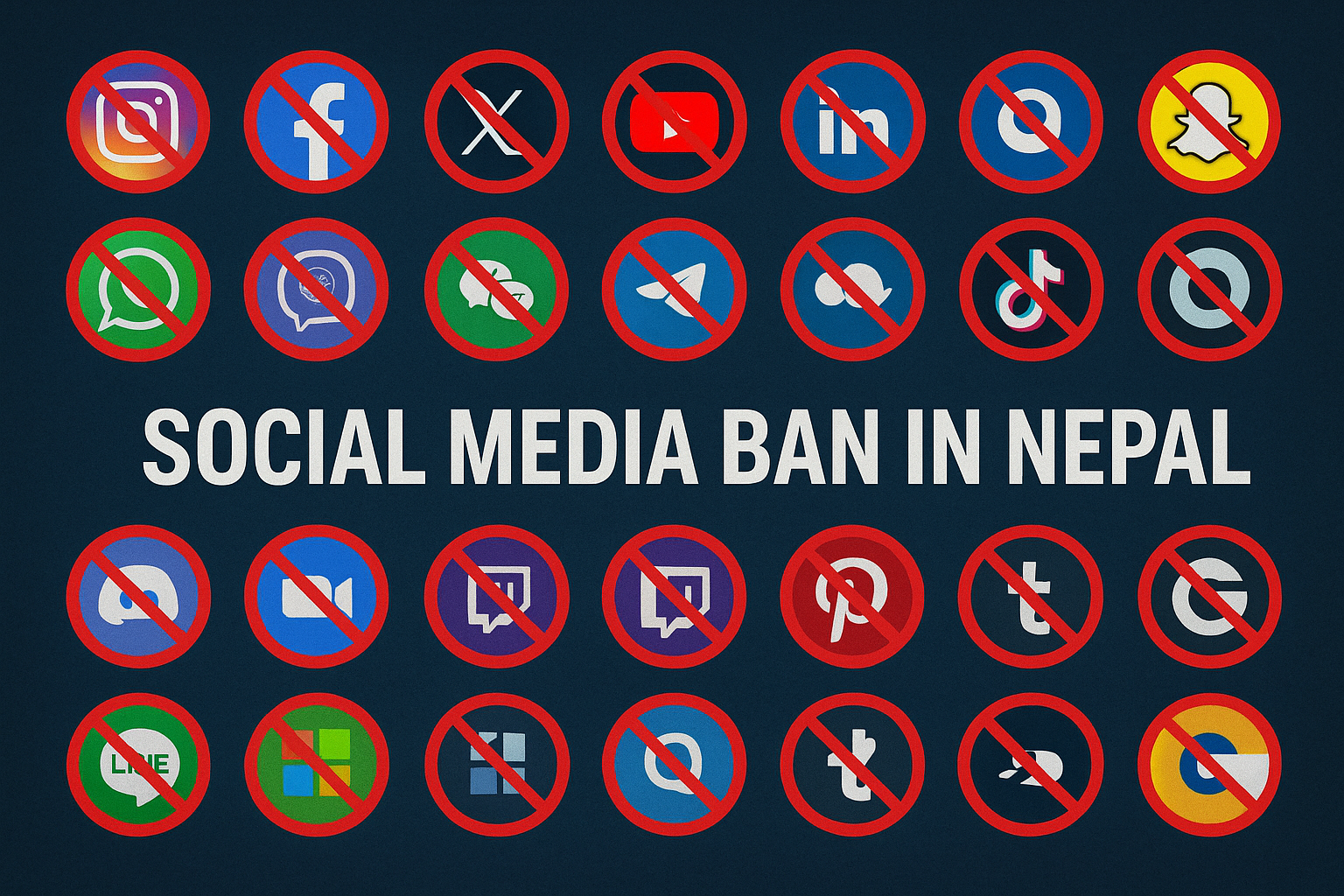
The recent social media ban in Nepal has ignited passionate discussions among citizens, businesses, and advocates for digital rights. On September 4, 2025, the Government of Nepal made the official announcement to ban 26 major social media platforms, including Facebook, YouTube, Instagram, WhatsApp, LinkedIn, and X (formerly Twitter). This action, commonly referred to as the Nepal social media ban, was defended by the government as a necessary step due to these platforms’ failure to comply with local regulations.
So, what does this mean for everyday people, businesses, and the future of internet freedom in Nepal? Let’s dive into the details.
Why Did Nepal Ban Social Media Platforms?
The government’s choice to block Facebook, YouTube, X, Instagram, and others stemmed from these companies not registering with Nepal’s Ministry of Communication and Information Technology (MoCIT) by the deadline set by the Supreme Court of Nepal.
Some key reasons behind the Nepal social media ban include:
– Curbing misinformation and fake news.
– Tackling cybercrime and scams.
– Demanding local accountability by requiring platforms to appoint a Nepali representative.
– Ensuring content regulation in line with Nepal’s new digital policies.
This represents the most significant internet regulation in Nepal since the emergence of digital platforms.
Which Social Media Platforms Are Banned in Nepal?
The ban encompasses 26 major platforms that didn’t meet the registration requirement. Among these are:
– Facebook (Meta) -Messenger
– YouTube (Google)
– Instagram (Meta)
– X / Twitter
– Snapchat
This situation is already being discussed globally as the Nepal blocks Facebook and YouTube case.
Which Apps Are Still Working in Nepal?
Interestingly, not all apps are affected by the ban. Platforms that have successfully registered with the Nepalese government are still operational. These include:
– TikTok
– Viber
– WeTalk
– Nimbuzz
– Poppo Live
Other platforms, like Telegram, are currently under review and may be unblocked soon once they meet compliance requirements.
Public Reaction to the Social Media Ban in Nepal
The social media ban in Nepal for 2025 has left many people scratching their heads.
For users: Millions of Nepalis depend on platforms like Facebook, WhatsApp, and YouTube to stay connected and informed. This ban has severed ties for migrant workers and students who are trying to keep in touch with their families overseas.
For businesses: Small and medium enterprises that rely on Facebook ads, Instagram promotions, and YouTube marketing are now facing significant challenges.
For media & journalists: The Federation of Nepali Journalists (FNJ) has voiced strong opposition to the ban, labeling it a direct assault on free speech and press freedom in Nepal.
This situation has sparked conversations about internet freedom in Nepal and the future of digital rights.
Economic & Social Impact of the Ban
Business Losses – Thousands of local businesses have been using Facebook Marketplace and Instagram Shops for their online sales, and now their main advertising avenues have vanished overnight.
Job Market Impact – Many digital marketers, freelancers, and influencers in Nepal have lost their primary sources of income due to the ban.
Rise of VPN in Nepal – With major apps being blocked, the use of VPNs has surged as users seek ways to bypass these restrictions. However, this trend comes with cybersecurity risks, as many Nepalis may not be aware of safe VPN practices.
Education Disruption – Students who relied on YouTube tutorials and LinkedIn networking for their career development are now left in the lurch.
Government’s Stance vs Critics
Government’s Argument: Officials assert that the new social media law in Nepal aims to promote digital accountability, user safety, and content moderation. They insist this isn’t censorship but rather a necessary step for compliance.
Critics’ View: Civil society groups contend that the social media ban is a breach of free speech and could tarnish Nepal’s global standing. Many are concerned that this could lead to a form of digital authoritarianism.
What Happens Next?
The government has made it clear that the ban is only temporary. Social media platforms will be allowed back once they register locally, appoint representatives, and comply with Nepal’s internet laws.
In the meantime:
People in Nepal will keep relying on VPNs to get online.
Businesses will need to adapt to using TikTok, Viber, and other alternative apps.
Activists and journalists will continue to fight against what they see as internet censorship in Nepal.
Conclusion
The social media ban in Nepal goes beyond just a digital issue—it touches on freedom of speech, access to information, and the digital economy. Whether this decision leads to a more regulated internet or pushes Nepal toward limited digital freedom will depend on how the government and tech companies navigate the upcoming challenges.
For now, the social media ban in Nepal is a reality affecting millions, and its long-term consequences will play a significant role in shaping the country’s digital landscape.